The Ultimate Guide to Reverse Osmosis Systems in 2025
Introduction: Entering a New Era of Healthy Drinking Water
In today's rapidly changing modern society, the water quality challenges we face are more complex than ever before. From persistent chemicals (such as PFAS) and heavy metals discharged by industrial activities to the increasing microplastics and disinfection byproducts in urban water supply systems, many invisible threats are increasingly affecting our health. These contaminants may not only alter the taste and odor of water, but more importantly, they may pose long-term potential risks to human health.
Facing these challenges, traditional simple filtration methods can no longer meet the growing health and safety needs. Consumers are seeking a more comprehensive and reliable solution—a technology that can fundamentally solve water quality problems. Reverse Osmosis (RO) systems, widely recognized as one of the "most complete filtration systems" available, represent exactly such an ultimate water purification choice.
Chapter 1: Unveiling the Science Behind Reverse Osmosis—Precision Filtration in the Microscopic World
1.1 Reverse Osmosis: A Race Against Natural Laws
To understand the power of reverse osmosis technology, we first need to understand how it works. Reverse osmosis is a clever reverse application of the natural "osmosis" phenomenon. In natural osmosis, water molecules spontaneously flow from a low-concentration (less impurities) solution area through a semi-permeable membrane to a high-concentration (more impurities) area to achieve equilibrium between the two solutions.
The reverse osmosis system works in exactly the opposite way. It applies external high pressure to force water molecules to move against the natural osmosis direction, passing through a semi-permeable membrane with extremely small pores. This core component, called the RO membrane, has microscopic pores measuring only 0.0001 microns (0.1 nanometers). When water is pushed through this membrane under high pressure, water molecules can pass through, while all impurities, contaminants, and dissolved salts that are larger than water molecules or dissolved in water are retained and eventually discharged as waste water.
1.2 Multi-Stage Purification Process: Every Step Matters
An efficient RO system doesn't rely solely on one membrane, but rather on a multi-step collaborative purification process. Each stage has its unique function, designed to provide the safest and purest water:
Prefiltration: This is the system's first line of defense. Before raw water enters the core RO membrane, it first passes through sediment and activated carbon filters. This step aims to remove large particles like sand and rust, as well as chlorine and other chemicals that could damage the RO membrane, thereby protecting and extending the RO membrane's lifespan.
Core RO Membrane Filtration: This is the heart of the RO system and the core of its excellent purification capability. The RO membrane's ultra-microscopic pores can effectively filter most contaminants, including bacteria, viruses, heavy metals, chemicals, and pesticides. It is one of only two filtration or purification systems capable of removing minerals from water (the other being distillation). These systems can potentially remove water contaminants such as lead, volatile organic compounds (VOCs), PFAS, arsenic, bacteria, and viruses.(EPA, Point-of-Use Reverse Osmosis Systems)
Post-filtration: Before the water finally flows out of the faucet, the water filtered through the RO membrane passes through another post-activated carbon filter to further improve taste and safety. For some remineralization systems, this step also adds beneficial minerals back into the water.
Chapter 2: The Ultimate Purification Power of Reverse Osmosis—Solving Multiple Water Quality Challenges at Once
2.1 Exceptional Contaminant Removal Capability
Reverse osmosis systems are praised as one of the "most complete filtration systems" on the market because they can remove up to 99% of contaminants. Their purification range covers a wide range of categories from heavy metals to microscopic pollutants:
Heavy Metal Contaminants
Lead, Arsenic, and Heavy Metals: RO technology can effectively remove lead, arsenic, hexavalent chromium, copper, and other heavy metals from water, which pose serious health hazards. For more information about lead contamination, please read How to Remove Lead from Water.
Persistent Chemical Substances
PFAS (Forever Chemicals): These chemicals that are difficult to decompose in the environment are called "forever chemicals," and RO systems can effectively remove these harmful substances. For detailed information, please refer to What Are PFAS and How Can We Safely Remove Them from Drinking Water?
High-pressure membranes, such as nanofiltration or reverse osmosis, have been extremely effective at removing PFAS.(EPA, Reducing PFAS in Drinking Water with Treatment Technologies.)
Membrane Separation Technology. Nanofiltration (NF) and reverse osmosis (RO) are both found to be effective techniques for PFAS removal.(MDPI, A Critical Review on PFAS Removal from Water.)
Microbial Threats
Bacteria and Viruses: The ultra-small pore size of RO membranes can physically block bacteria and viruses, providing microbial safety protection. For more information, please see Does Reverse Osmosis Remove Bacteria and Viruses.
Common Chemical Substances
Chlorine and Fluoride: Effectively removes chlorine gas and fluoride from tap water, improving water quality and taste. Click to learn more about Is Fluoride Bad for You?
Other Chemicals: Reverse osmosis filters will remove some types of chemicals from water, including lead, copper, chromium, chloride, and sodium.(CDC, About Choosing Home Water Filters.)
Chapter 3: Addressing Consumer Concerns—Converting Potential Objections into Trust
3.1 Core Concern 1: Is RO Water Healthy?—The Mineral Myth
A common misconception is that RO systems, while removing harmful substances, also remove beneficial minerals such as calcium and magnesium. However, modern nutritional research shows that the minerals needed by the human body mainly come from food rather than drinking water, and pure RO water itself has positive health benefits.
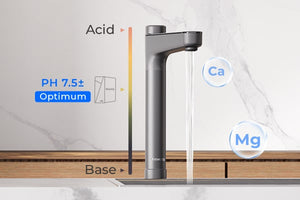
More importantly, modern RO systems like Waterdrop's innovative products have already solved this problem. Through remineralization process, the system can add natural minerals back after filtration, ensuring both water purity and beneficial components. For more information, please see How to Remineralize Reverse Osmosis Water.
3.2 Core Concern 2: Do RO Systems Waste Water?—Environmental Solutions Through Modern Technology
A well-known drawback of traditional RO systems is that they produce large amounts of wastewater. Traditional under-sink RO systems often have a ratio of 1:4 or 1:3, while more efficient, modern tankless systems can achieve higher ratios.
Waterdrop's X Series Undersink Reverse Osmosis Systems have significantly improved this issue with a pure to drain ratio of 3:1, meaning only 1 cup of waste water is produced for every 3 cups of pure water. This greatly reduces water waste. Additionally, the so-called "wastewater" is actually just water with higher TDS and can be completely used for flushing toilets and other non-drinking purposes, achieving full utilization of water resources. Reverse osmosis filters remove parasites, bacteria, and viruses.(CDC, About Water Treatment Options When Hiking, Camping, or Traveling.)
4.2 Clarifying Choices: The Difference Between RO Systems and Water Softeners
When choosing water treatment equipment, users often confuse reverse osmosis systems with water softeners. Although both aim to improve water quality, their functions and purposes are completely different. You can click here to Understand Water Softener and Reverse Osmosis System.
RO Systems:
Function: Remove contaminants, heavy metals, chemicals, microorganisms, etc.
Purpose: Provide safe and healthy drinking water
Installation location: Usually under the kitchen sink
Output: Pure drinking water
Water Softeners:
Function: Remove calcium and magnesium ions (hardness minerals) from water
Purpose: Prevent scale buildup, protect appliances and pipes
Installation location: Usually at the main water line entrance
When choosing an RO system, consider the following factors:
Household Water Usage: Choose appropriate water production capacity (GPD) based on family size
Installation Space: Consider kitchen space size, choose tank or tankless systems
Special Needs: Whether remineralization, instant hot and cold functions, etc. are needed
Budget Considerations: Balance initial investment with long-term usage costs
5.2 Maintenance and Usage Recommendations
To ensure long-term stable operation of your RO system:
Regularly replace filters (based on usage and water quality conditions)
Monitor system performance indicators (TDS values, water pressure, etc.)
Keep the system clean to avoid secondary contamination
Choose brands with quality assurance and after-sales service
Conclusion: Choose Waterdrop, Choose Trust and Health
Reverse osmosis technology represents the pinnacle of home water purification technology. It not only solves current complex water quality challenges but also provides long-term health protection for families. Waterdrop, as an industry-leading brand, has elevated RO technology to new heights through continuous technological innovation—from tankless design to smart monitoring, from remineralization technology to environmentally friendly waste water ratios.
Choosing Waterdrop reverse osmosis systems means choosing:
Scientifically reliable water purification technology
Environmentally efficient water usage solutions
Smart and convenient user experience
Healthy and safe quality of life
In 2025, an era of increasing health awareness, investing in a high-quality reverse osmosis system for your family is not only protection for current health but also an investment in future quality of life.
Explore Waterdrop Reverse Osmosis Systems now and bring pure, healthy changes to your family: Visit Official Website
About the Author: This guide is written by a team of experts in the field of water purification, dedicated to providing consumers with scientific and reliable water quality information to help everyone make the best health choices.
$10.99 (Package Weight: Under 9 lb)
$26.99 (Package Weight: 9 - 22 lb)
$42.99 (Package Weight: Over 22 lb)
* Shipping charges for your order will be calculated and displayed at checkout.
* Delivery time is based on the shipping date, not the order date. Please note that actual shipping dates may be delayed due to factors such as invalid shipping addresses, weekends, or holidays.
Handling Time:
We need 24 to 48 hours to prepare your order. Most packages will be shipped within 24 hours, excluding weekends and holidays.
Track your order
Once your order has shipped, you'll receive an email with tracking information. You can also find tracking details on your "Order Details" page.
Shipping origin
The package will be shipped from one of our US warehouses closest to your location.
* If you have any questions, feel free to contact our customer service via LiveChat or email us at service@waterdropfilter.com. We will respond as soon as possible!
Shipping areas
We deliver to most U.S. states. Some products can be shipped to Alaska and Hawaii for an additional shipping fee. However, We currently do not deliver to American Samoa, Micronesia, Guam, Marshall Islands, Northern Mariana Islands, Palau, Puerto Rico, and the U.S. Virgin Islands.
International shipping
Unfortunately, we do not support international shipping at this time.
Shipping Carriers
We partner with four carriers—UPS, USPS, FedEx, and Amazon Logistics US—to ensure timely delivery
Note: We cannot accommodate specific carrier requests.
Delivery Time Exceeded
Shipping delays may occur due to weather, natural disasters, carrier issues, or high-risk orders. If your order is delayed, please contact us at service@waterdropfilter.com, and we will check the situation with the transportation company promptly. Thank you for your understanding and support.
Sales Tax
Sales tax will be collected as required by U.S. law for deliveries to the following states: AZ, CA, CO, FL, GA, IL, IN, KY, MA, MD, MI, MN, NC, NJ, NV, NY, OH, PA, TX, UT, VA, WA, WI. Rates are determined by local governments, and all collected taxes will be promptly reported to the IRS.