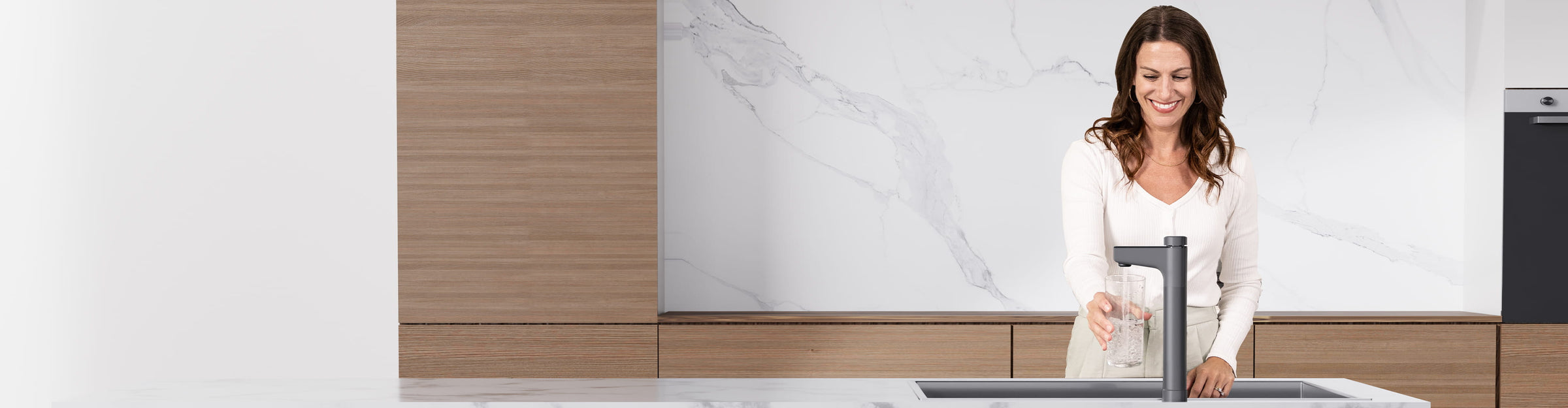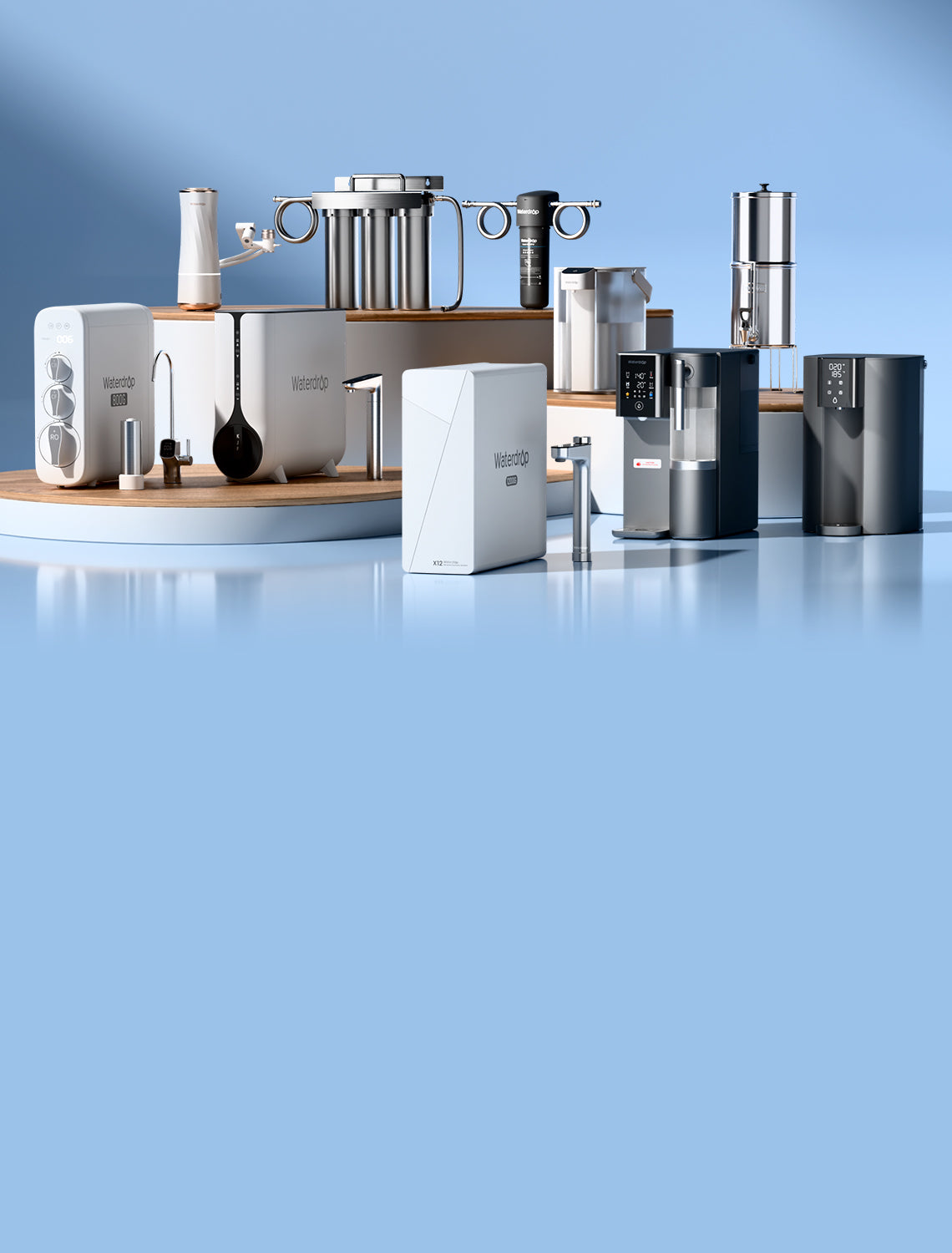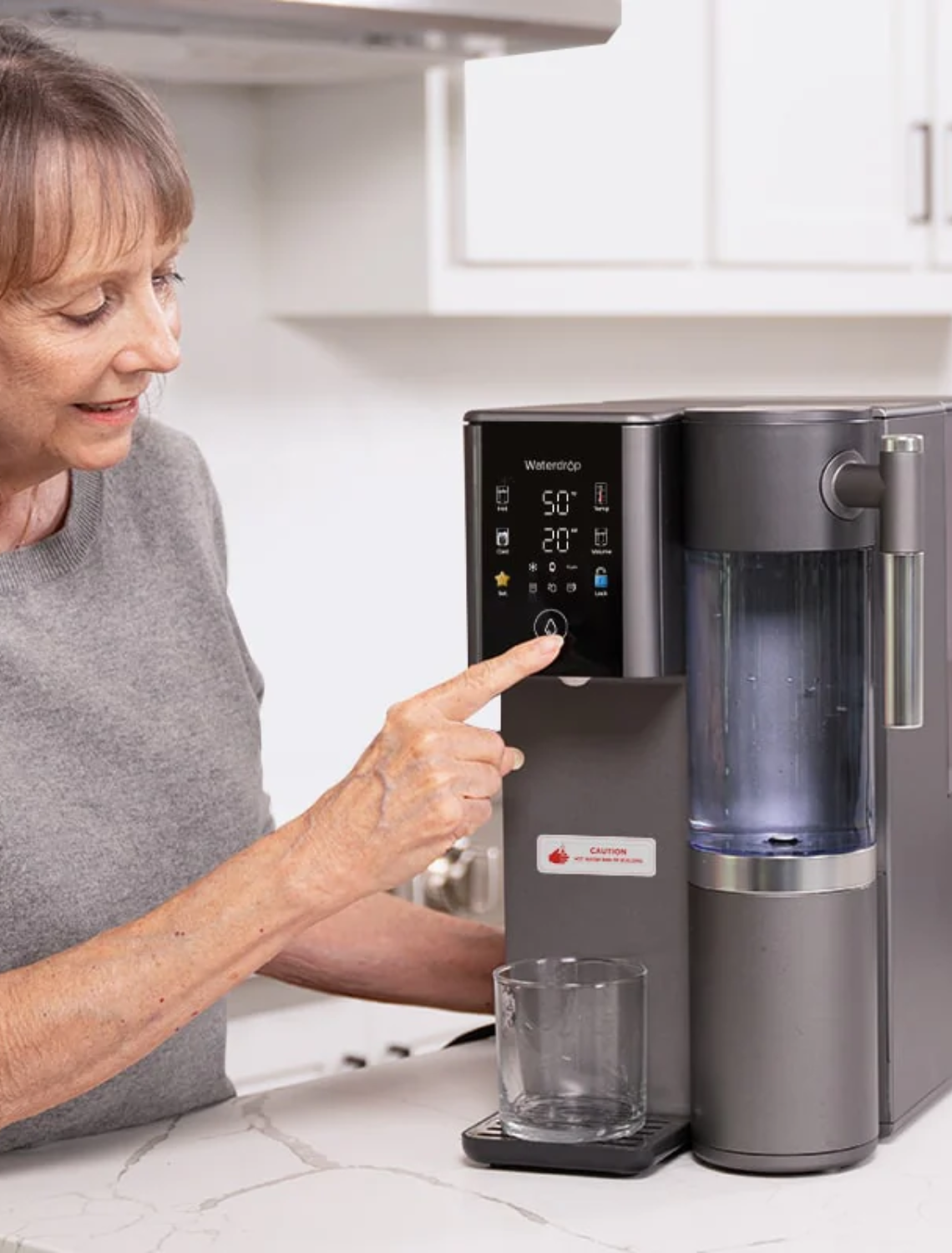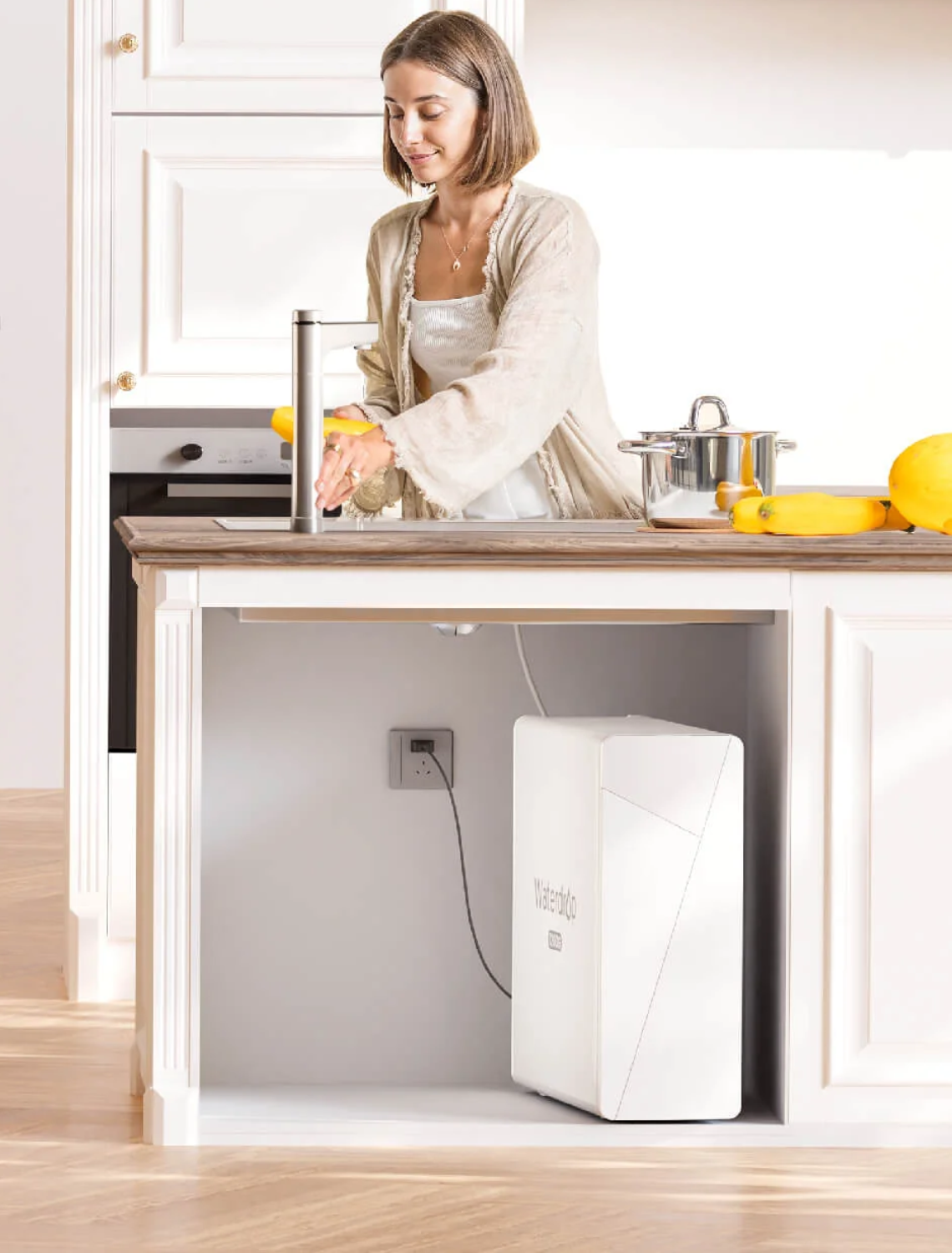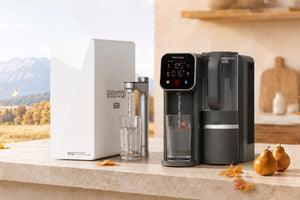
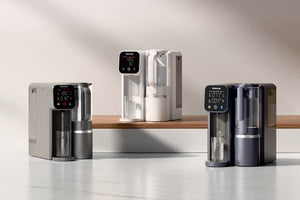
Enjoy fresh, pure water every day with Waterdrop reverse osmosis water filters. Perfect for your kitchen, saving space while providing fast, clean water for cooking, drinking, and more.
Model number WD-G2-B/WD-G2-W Item weight 20.94 pounds Materials System cover: BPA-free plasticFaucet: metalMRO filter: reverse...
1 -12 of
114 products
Why Choose Waterdrop Reverse Osmosis System
You've probably seen the headlines about PFAS "forever chemicals" and microplastics in your everyday
drinking water. The unsettling part? You can't detect them by taste or smell. They're invisible and
potentially harmful. That's why more families are turning to reverse osmosis (RO)—the gold standard in
water purification.
That's where Waterdrop Reverse Osmosis system comes into play. RO systems are the gold standard for
home water purification. The technology forces water through a semi-permeable membrane with 0.0001
micron pores. This great barrier catches virtually everything except water molecules.
Key Advantages of Waterdrop RO systems:
1. Comprehensive Contaminant Removal
Our multi-stage filtration is NSF/ANSI certified. It eliminates over 1,000 harmful substances. This
includes 99% TDS (Total Dissolved Solids), lead, arsenic, fluoride, nitrates, and PFAS.
2. Unmatched Filtration
The 0.0001 micron RO membrane captures microscopic particles. It removes viruses, bacteria, heavy
metal ions, and microplastics. Purity exceeds bottled water standards.
3. Smart Design
Quick-change filters use a twist-and-pull design. No tools are needed. Changes take 3 seconds or less.
Smart LED faucets display real-time TDS levels and filter lifespan.
4. Eco-Friendly
High pure-to-drain ratio minimizes wastewater, which helps eliminates plastic bottle waste and
protects both your family and the environment.
Reward
Waterdrop Rewards
Earn points for every dollar you spend, and enjoy free shipping on all orders, and more.
A reverse osmosis system works by using a high-pressure pump to
increase the pressure on the salt side of the RO membrane and force
the water across the semi-permeable RO membrane, leaving almost all
(around 95% to 99%) of dissolved salts behind in the reject stream.
The amount of pressure required for the reverse osmosis water filter
depends on the salt concentration of the feed water. The more
concentrated the feed water, the more pressure is required to overcome
the osmotic pressure in the reverse osmosis system. The desalinated
water that is demineralized or deionized, is called permeate (or
product) water. The water stream that carries the concentrated
contaminants that did not pass through the RO membrane is called the
reject (or concentrate) stream.
As the feed water enters the reverse osmosis system's RO membrane
under pressure (enough pressure to overcome osmotic pressure) the
water molecules pass through the semi-permeable membrane and the salts
and other contaminants are not allowed to pass and are discharged
through the reject stream (also known as the concentrate or brine
stream), which goes to drain or can be fed back into the feed water
supply in some circumstances to be recycled through the reverse
osmosis system to save water. The water that makes it through the RO
membrane is called permeate or product water and usually has around
95% to 99% of the dissolved salts removed from it.
It is important to understand that a reverse osmosis system employs
cross filtration rather than standard filtration where the
contaminants are collected within the filter media. With cross
filtration, the solution passes through the filter, or crosses the
filter, with two outlets: the filtered water goes one way and the
contaminated water goes another way. To avoid buildup of contaminants,
cross flow filtration allows water to sweep away contaminant build up
and also allow enough turbulence to keep the membrane surface clean.
This blog explains more on the reverse osmosis system.
How does a reverse osmosis water filter work?
A reverse osmosis water filter removes sediment and chlorine from
water with a prefilter before it forces water through a semipermeable
membrane to remove dissolved solids. After water exits the RO membrane
in the reverse osmosis system, it passes through a postfilter to
filter the drinking water before it enters a faucet.
While seeking the best reverse osmosis water filter for your home
kitchen, you may come across below options:
1. Countertop or under-counter reverse osmosis system. Most of the
countertop RO systems don't need to connect to any pipelines which
means they are very easy to install. But the downside is that you need
to feed tap water into the water storage tank every time when the tank
is empty of water. And for under-counter reverse osmosis water filter,
you need to take a rather complicated process dealing with the pipe
work before use. But the advantage is that everything becomes so easy
after the installation. The modern Waterdrop tankless reverse osmosis
system is designed for DIY installation and usually could be installed
within 30mins by yourself.
2. Tankless reverse osmosis system or tank RO system. Tankless reverse
osmosis system doesn't have a tank thus it saves more space than a
reverse osmosis system with a tank. The tank of a reverse osmosis
water filter is designed to collect filtered water by which you don't
need to wait for a long time if you need a large quantity of water.
However, the water tank of a traditional reverse osmosis system has a
rubber bladder inside and will facilitate the growth of bacteria,
except it can be flushed and cleaned regularly.
3. UV function. UV rays is a technology used to penetrate the cells of
bacteria and viruses and destroy their ability to reproduce. Actually,
most of the reverse osmosis water filter could effectively remove the
bacteria and viruses in water because the pore size of reverse osmosis
(RO) membrane is far larger than the diameter of bacteria and viruses.
But if the bacteria and viruses of your water are in great concern,
you could choose to use a reverse osmosis system with UV function.
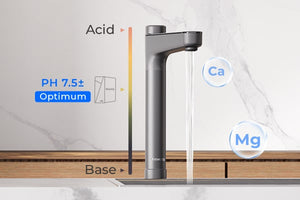
4. Remineralize RO water system. A remineralization filter stage
ensures you get healthy mineral water by adding beneficial minerals,
improve the water taste and pH value. It's okay to buy a reverse
osmosis water filter with a minimal filter if you want to use
reminimalize water. But if you already have a reverse osmosis system
without reminimalize function, you only need to buy a remineralize
filter and add on to your system.
Is reverse osmosis water healthy?
A reverse osmosis system removes nearly 95% of particles and dissolved
contaminants from drinking water.
Filtering water with a reverse osmosis water filter will remove the
majority of minerals in water and greatly improve the taste of
drinking water. Because minerals in water are in an inorganic state
that our bodies cannot digest, removing the minerals does not make RO
filtered water unhealthy. So, keep in mind that while minerals are
essential for proper health, food is the primary source of the
minerals our bodies need to be healthy, and in a form our bodies can
digest.
Does reverse osmosis kill bacteria?
A reverse osmosis system doesn't kill bacteria. Using reverse osmosis
water filter technology with a filtration accuracy of 0.0001μm, the
reverse osmosis system can effectively remove bacteria from your tap
water.
Can bacteria grow in RO water?
Tank reverse osmosis system has a rubber bladder inside the tank.
Bacteria would grow day by day if you don't flush and clean the tank
very often. Waterdrop tankless reverse osmosis water filter prevents
the bacteria and viruses from building up by deleting the water tank.
Does reverse osmosis remove salt?
Yes, a reverse osmosis system can remove salt in water as well as the
salt made by water softener.
How do you flush Waterdrop reverse osmosis?
For CF filter in the reverse osmosis water filter, it will be flushed
automatically for 5 minutes without turning on the RO faucet. For CB
filter, turn on the RO faucet to flush for 15 minutes. For RO filter
in the reverse osmosis system, turn on the RO faucet to flush for 30
minutes.
Can I install a reverse osmosis system myself?
Yes, Waterdrop reverse osmosis water filter is designed for DIY
installation and is simple enough for you to install in 30 minutes.
Refer to our instruction manual and videos or
contact us
if you have any trouble in installing the reverse osmosis system.
How do I test my reverse osmosis water?
Waterdrop reverse osmosis system has a smart faucet and smart TDS
monitoring panel to display water quality in real time and understands
every drop of your water from the reverse osmosis water filter.
How do you remineralize RO water?
You can add a Waterdrop remineralization filter to your reverse
osmosis water filter to remineralize RO water. Click to learn
How to Remineralize Reverse Osmosis Water.
Is a reverse osmosis system noisy?
A reverse osmosis water filter is very quiet though you may hear a
"gurgling" sound as the "concentre" or waste water flows from the
membrane to the drain. For Waterdrop reverse osmosis system there is a
pump inside. The pump helps to increase the water pressure in the
reverse osmosis water filter. RO systems are designed so that
"crossflow" water flushes the concentrated contaminates away from the
reverse osmosis system. This flushing keeps the unit from foulin
How long do reverse osmosis systems last?
If you properly care for Waterdrop reverse osmosis water filter, your
reverse osmosis system should have a very long lifespan; Reverse
osmosis systems usually last between 10 years. While the reverse
osmosis systems themselves have a long lifespan, the RO membrane and
filters need replacing periodically. The prefilters and post filters
in the reverse osmosis water filter should be changed every 6 months
to 1 year. Depending on your water conditions, the RO membrane in the
reverse osmosis system should be replaced every 2 years. For other
tank reverse osmosis systems, usually the tank will not need to be
replaced sooner than ten years.
How much water can an RO system produce each day?
The typical
under-counter reverse osmosis system
tank is 12 inches in diameter and 15 inches tall. The reverse osmosis
water filter will operate under water pressure ranging from 40 to 100
psi and generate ten to 75 gallons per day. Waterdrop tankless reverse
osmosis system uses high flow membrane and can generate 400 gallons
per day.
How about Waterdrop reverse osmosis system review?
The rating of Waterdrop reverse osmosis water filter customer review
is above 4.7. Many customers rated on "instruction quality", "flavor",
"easy to install" and "value for money" on Waterdrop reverse osmosis
system.
A reverse osmosis system vs. a water softener
A reverse osmosis water filter removes minerals like calcium and
magnesium that cause hard water, but it's not designed to soften
water.
A water softener is installed at the point of entry to treat the whole
house and is much less expensive and much more efficient than whole
house reverse osmosis system at treating hard water. Water softening
exchanges mineral ions with sodium to remove hardness instead of
filtering out the minerals like reverse osmosis water filter. Unlike a
reverse osmosis system, a water softener does not filter harmful
contaminants from water.
Water is softened during reverse osmosis. However, using a reverse
osmosis water filter to treat hard water shortens the life of the RO
membrane. This will lead to more frequent membrane replacements in the
reverse osmosis system.
Reverse osmosis systems and water softeners benefit each other. A
water softener installed before the reverse osmosis system removes
iron from the water that can stain your shower, clothes, and toilet
orange and clog the RO membrane. Adding an
under-sink reverse osmosis water filter
is a great way to remove extra sodium added by the softener.
Is a reverse osmosis system worth it?
If your drinking water contains high levels of TDS or harmful
dissolved contaminants like silica, nitrates, or arsenic, then a
reverse osmosis water filter is certainly worth the investment.
A reverse osmosis system removes nearly 95% of particles and dissolved
contaminants from drinking water. It does this through a natural
process using simply the force of household water pressure without any
chemical additives. Your beverages, ice, recipes, and drinking water
are all enhanced with water from the reverse osmosis water filter.
Looking at cost alone, reverse osmosis systems generally cost less
than 30-cents per day to own and operate for a family of four. From a
cost-savings perspective, a reverse osmosis system would save nearly
$300/year.
Where is a RO system stored?
A reverse osmosis water filter is generally installed and stored under
the kitchen sink. Under-counter reverse osmosis systems have a holding
tank and several filter phases.
How Does Reverse Osmosis Remove Impurities?
In a reverse osmosis system, it is accomplished by water pressure
pushing tap water through a semipermeable membrane to remove
impurities from water. This is a process in which dissolved inorganic
solids are removed by the reverse osmosis water filter.
Whole House Reverse Osmosis Water Filters
A whole house reverse osmosis system allows RO filtered water at all
sinks, showers and appliances throughout the house. A whole house
reverse osmosis water filter ties into the main water line coming into
your home and is generally installed in the garage.
Does RO water filter remove minerals that are essential to health?
Filtering water with a reverse osmosis water filter will remove the
majority of minerals in water and greatly improve the taste of
drinking water. Because minerals in water are in an inorganic state
that our bodies cannot digest, removing the minerals does not make
water from the reverse osmosis system unhealthy. So, keep in mind that
while minerals are essential for proper health, food is the primary
source of the minerals our bodies need to be healthy, and in a form
our bodies can digest.
Are all reverse osmosis water systems the same?
There are basically two types of reverse osmosis water filter for
home—one with a drinking water storage tank, and one without it. In a
tank reverse osmosis system, drinking water is stored in a tightly
sealed container after the filtering process. On the other hand, using
a tankless reverse osmosis water filter, you can get purified water
anytime you want without waiting.
How does RO water compare to bottled water?
Compared with bottled water, most people prefer reverse osmosis water
filter water. A reverse osmosis system with carbon filtration function
will remove chlorine, chloramines, arsenic, pesticides, herbicides,
etc. The removal of these pollutants not only makes drinking water
safer, but also greatly improves the taste. Compared with bottled
water, the filtered water of the Waterdrop reverse osmosis water
filter is fresher, healthier and safer. Most importantly, water from
the reverse osmosis system saves the cost of bottled water and is more
beneficial to the environment because you are not adding water bottles
to the local landfill.
Does RO water filter need electricity?
Traditional tank reverse osmosis water filter run on water pressure so
electricity is not needed. Waterdrop reverse osmosis system adds an
electric pressure-boost pump for fast water flow rate. So, you need an
electricity supply under the kitchen cabinet for the reverse osmosis
water filter.
Can a water softener connect to the RO system?
If you have a salt-based water softener, we do not recommend placing
the reverse osmosis system after it, since the ions added by the water
softener cannot be 100% removed by the reverse osmosis water filter
(removal rate 90%), so the water taste may be affected.
If your water softener is not salt-based, then yes, our reverse
osmosis system can be used with that kind of soft water.
Does RO system waste a lot of water?
Reverse osmosis is a process through which water gets forced through a
series of fine membranes in the reverse osmosis water filter. Water's
composition allows it to pass through these membranes, leaving larger
particles (contaminants like heavy metals, sediment, etc) behind.
Waterdrop reverse osmosis system has a 1:1 low drain ratio. For every
gallon of purified water your reverse osmosis water filter produces,
it will likely have used roughly one gallon.
Is distilled water purer than RO water?
Distillers usually remove a few parts per million more of common
mineral components, such as sodium. However, for low-boiling volatile
chemicals, distillers are not that efficient. E.g. chloramine, which
many cities use today instead of chlorine as a disinfectant, cannot be
removed by distillers effectively. However, the use of reverse osmosis
water filter with carbon filters does a very good job in removing
evidence of chloramines. Unless volatile chemicals like chlorine are
removed by carbon filtration before entering the distiller, they will
be released into the air or eventually remain in the distilled water.
Is reverse osmosis the same as distilled water?
While both reverse osmosis systems and distillers effectively reduce
the "dissolved solids" content of water, the processes are quite
different. A reverse osmosis water filter filters water through a very
tight semi-permeable membrane, while a distiller is like a big
teakettle in that it boils water, catches the steam, condenses it, and
captures the resulting water. Most impurities are left behind in the
boiling chamber.
What contaminants will reverse osmosis system remove?
A reverse osmosis water filter will remove:
• TDS, chlorine, taste and odor, chloramine, scale, turbidity.
How much of a contaminant can a reverse osmosis system remove?
A reverse osmosis water filter can remove:
• Fluoride (85-92%)
• Lead (95-98%)
• Chlorine (98%)
• Pesticides (99%)
• Nitrates (60-75%)
• Sulfate (96-98%)
• Calcium (94-98%)
• Phosphate (96-98%)
• Arsenic (92-96%)
• Nickel (96-98%)
• Mercury (95-98%)
• Sodium (85-94%)
• Barium (95-98%)
Where to use a reverse osmosis system?
Below are few industrial applications of reverse osmosis systems:
1. Boiler feed-water treatment
2. Pharmaceuticals
3. Food and Beverages
4. Semiconductors
5. Metal finishing
6. Power generation
Below are a couple of areas of the household setting where reverse
osmosis water filter come really handy:
1. Ice machines
2. Faucets
3. Well water
4. Aquariums
5. RVs.
Total Dissolved Solids (TDS) is a measure of the combined content of
all inorganic and organic chemicals dissolved in water. These
components could be in molecular, ionized or micro-granular
suspended form. Examples of inorganic chemicals that commonly
contribute to a measurement of TDS include calcium, magnesium,
potassium, sodium, bicarbonate, chloride, and sulfate. Organic
chemicals that may contribute to TDS can derive from land
application of chemicals, industrial release of chemicals to the
environment, vegetable matter, and/or animal matter. In a laboratory
setting, TDS is measured by weighing the mass of solids remaining
when water is evaporated completely. In practice, handheld meters
are often used to approximate the TDS in water based upon a
conductivity measurement. TDS varies widely from region to region
(and store to store) and is generally determined by the water source
(groundwater or surface water) and geologic make-up of the region. A
reverse osmosis water filter is the best solution for
removing TDS from drinking water.
What are the benefits of the RO water purifier system?
A reverse osmosis system removes lead from water and frees people
from many diseases such as high blood pressure, nerve damage and low
fertility. Drinking water from a reverse osmosis water filter can
also eliminate risks of brain damage and anemic conditions,
especially in children.
Does reverse osmosis system remove fluoride from water?
Yes! A reverse osmosis water filter is the best solution for
removing fluoride from drinking water. A reverse osmosis system can
remove 85-92%* of fluoride in your water.
Tankless RO water filter vs. Traditional RO with storage tank
Traditional reverse osmosis system with storage tank holds reverse
osmosis water so you have plenty to use when you need it. A
traditional reverse osmosis water filter makes water slowly. It
takes one minute to produce two to three ounces of RO water. If you
were to turn on your faucet for a glass of water at the actual
membrane production rate, then you would have to wait at least 5
minutes for it to fill. With a storage tank, your glass fills
instantly. But the inside of a traditional reverse osmosis system
tank accumulates and breed heterotrophic bacteria over time.
Waterdrop tankless reverse osmosis water filter has overcome the
issue of bacteria colonizing in the bladder tank. With no storage
tank to fill, Waterdrop tankless reverse osmosis system does not run
until RO water is needed.
Does the reverse osmosis water filter system produce wastewater?
All reverse osmosis systems will produce concentrated water to
discharge impurities. Compared to traditional reverse osmosis water
filter, Waterdrop reverse osmosis system produces less concentrated
water and saves 300% more water. You can collect concentrated water
to mop the floor, wash your car, do laundry, etc.
Does Waterdrop reverse osmosis water filter system need power?
The reverse osmosis system has a pump that will need power to
maintain a fast water flow rate in the reverse osmosis water filter.
Can this RO filter be used with hard water?
This reverse osmosis water filter can be used with hard water, and
the TDS removal rate will be 90% and above. But we do not recommend
using it as a source for the reverse osmosis system directly.
Can a RO system be connected to my fridge or ice machine?
First, you can make ice cubes or drink filtered water from water
produced by reverse osmosis water filter. In fact, ice made from
reverse osmosis system water produces clearer and better tasting ice
cubes because most of the contaminants are removed from the water by
reverse osmosis. To connect a reverse osmosis water filter to a
refrigerator icemaker/dispenser, an extra water storage tank is
required to assure proper operation. If your reverse osmosis system
doesn't have a storage tank, it is better not to connect the reverse
osmosis water filter to fridge.
The reverse osmosis system consists of several key components:
1. The reverse osmosis membrane is just one of the many basic
components you find in reverse osmosis water filter.
2. Cold water line valve, which is the water source for the reverse
osmosis system.
3. Pre-filter(s), which takes in the water from the cold-water line
valve. There may be multiple pre-filters in a reverse osmosis water
filter. Most pre-filter types include sediment filters and carbon
filters. Sediment water filters are designed to remove sediments
like dirt, sand, dust, and silts, while carbon water filters remove
chlorine. Carbon filters may be absent in some reverse osmosis
systems with a cellulose tri-acetate(CTA) membrane.
4. Post-filter(s) – water from the reverse osmosis system storage
tank goes through the post filter(s) before it gets to the RO
faucet. These filters are mostly carbon, and this is the stage where
odors and tastes are removed via post-filtration processes in the
reverse osmosis water filter.
5. Automatic shut off valve (ASOV) is included to stop water from
entering an already full storage tank in the reverse osmosis system.
It shuts off the flow of filtered water, and ultimately the flow of
water into the drain. It opens when the pressure in the tank drops
to allow the flow of water into the membrane and wastewater to the
drain.
6. Check valve, which ensures that pressurized filtered water in the
storage tank is not forced back to the RO membrane when the ASOV has
blocked the feed water pressure in the reverse osmosis water filter.
7. Flow restrictor, for regulating the water flowing through the RO
membrane in the reverse osmosis system. It sets the flow rate that
is best for the highest quality drinking water and maintains the
same. You can find it in the RO drain line tubing.
8. Storage tank is where the filtered water is stored in the reverse
osmosis water filter until it is drawn out of the faucet. It comes
in different sizes and contains a bladder that maintains the right
internal pressure when it is full.
9. Faucet, commonly installed on the kitchen sink, is where you draw
the filtered water from the reverse osmosis system.
10. The drain line is the line that connects the outlet end of the
RO membrane to the drain in the reverse osmosis water filter.
Contaminants that cannot make it through the RO membrane passes
through the drain line out of the reverse osmosis system.