




What Is GPM and Why It Matters
by
Dr. Jonathan Doyle - Updated February 06, 2026


GPM is an acronym that stands for Gallons Per Minute. It is measured in terms of the quantity of water that is
being transferred through your faucet, pipe, shower, or filter system in one minute.
GPM is different from water pressure, which is measured in terms of PSI (pounds per square
inch) . Water
pressure is measured in terms of the quantity of water that is being transferred through your faucet, pipe,
shower, or filter system in one minute.
Why GPM Is Important for Homeowners?
Knowing what GPM is can help homeowners in many different ways. For example, knowing GPM can help homeowners
choose the best water filter system that can provide them with enough water flow to satisfy their daily needs.
A good GPM can also help homeowners in terms of maintaining different home appliances that can be affected by
low water pressure.
How to Calculate GPM at Home
You can easily calculate the GPM of your water supply at home using the following formula:
- Take a bucket and put it under your water faucet or shower
- Measure the time taken to fill the bucket
- GPM = Gallons ÷ Seconds × 60
For example, if the water takes 30 seconds to fill 1 gallon, the GPM will be 2. Testing the GPM at
home will
help you choose the right water filtration system and also detect low water flow.

Typical GPM for Faucets and Showers
Faucets
The GPM of bathroom faucets ranges between 0.5 and 1.5, while the GPM of kitchen faucets ranges between 1.5 and
2.2. Having this knowledge will ensure that you have the right water flow for the comfort of your household.
Showers
Standard showerheads are restricted to 2.5 GPM in the US, while low-flow showerheads are restricted to 1.5 to
2.0 GPM. If you are not satisfied with the shower flow, you may need to check the shower fixture for
restrictions or a clog.
GPM in Water Filters and RO Systems
GPM is also important in water filtration systems. It measures the flow rate of water filtration.
- Faucet-mounted and under-sink water filtration systems have moderate flow rates.
- Whole-house water filtration systems need high flow rates.
- Reverse osmosis water filtration systems are rated in GPD (Gallons Per Day) instead of GPM because they have a water storage tank.
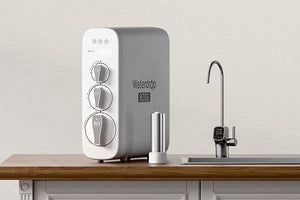
- Modern water filtration systems, such as Waterdrop reverse osmosis water filters, offer fast flow rates of filtered water.

How Much GPM Does a Household Need?
The GPM requirements vary depending on the size of the house.
- For small apartments, the GPM requirements will be between 4–6 GPM.
- For family homes with 2–3 bathrooms, the GPM requirements will be between 8–12 GPM.
- For large homes with multiple bathrooms, the GPM requirements will be between 15–20 GPM.
Therefore, the importance of selecting the correct water filtration system that suits the GPM requirements of
the house can be understood.
Click here to learn more about Microplastics in Drinking Water: An Invisible Threat with Growing
Consequences
Common GPM Problems and Solutions
Low GPM problems can occur due to the following issues:
- Clogged aerators and showerheads
- Buildup in the pipes
- Water filters restricting the water flow
FAQ About GPM and Water Systems
What is the difference between GPM and PSI?
GPM stands for Gallons Per Minute. GPM measures the volume of water that is flowing through the faucet or the
pipe.
PSI stands for Pounds per Square Inch. PSI measures the water pressure, which is the force with which the water
is coming out.

How do I know if my faucet or shower has the right GPM?
One way to do this is to use a bucket and a timer to test it. A bucket with a known volume of water is timed to
get the GPM flow rate, where GPM = Gallons ÷ Seconds × 60. This can be compared with standard flow rates for
bathroom faucets (0.5–1.5 GPM), kitchen faucets (1.5–2.2 GPM), and showers (1.5–2.5 GPM).
Can a water filter reduce my GPM?
Yes, it is possible for a water filter to reduce GPM flow rates. This is more common with lower-quality filters
or ones that are too small for household use. A good quality filter like Waterdrop water filters ensures good
flow rates without compromising on quality.
How much GPM does a whole house water filter need?
For an average household in the US, 8–12 GPM is enough to supply water to multiple fixtures in a house. However,
for larger homes with more bathrooms, 15–20 GPM may be necessary.

What is the difference between GPM and GPD in water filtration?
GPM is Gallons Per Minute, while GPD is Gallons Per Day, which refers to how much water is filtered in 24 hours.
Reverse osmosis filters use GPD ratings because they filter water slowly and store it for later use.
Conclusion
GPM is an essential but simple measurement for every homeowner. It is used to measure the water flow of faucets,
showers, and water filtration systems. By understanding GPM, you can select the correct filter for your needs
and enjoy clean and safe water.
Modern systems such as Waterdrop reverse osmosis water filters provide advanced filtration with reliable flow
rates, making them a practical solution for American homes seeking clean and convenient water.

Choose Your Water Solutions
- Smart Reverse Osmosis System No Tank, No Bacteria
- Water Filter for Sink Space & Water Saving
- Refrigerator Water Filter Pure Water, Effortlessly
- Water Filter Pitcher Stay Hydrated Always
- RO System Replacement Filters Change Your Filters Regularly
Categories
- Buyer's Guide Complete buying guides to help you choose wisely
- Water Contaminants Offer the best solution to solve the water problems
- Water Stewardship Responsibility for sustainable water management
- Home and Wellness A better and healthier world for individuals and families
- Customer Voice Take a look at how other users evaluate Waterdrop


