





Best 5 Tankless Reverse Osmosis Systems: Finding the Right One
by
Dr. Jonathan Doyle - Updated November 03, 2025


Last month, my neighbor paid $300 for bottled water. That's $3,600 per year
for safe, drinkable water. This costly choice faces many American families
on an ongoing basis.
The tankless reverse osmosis systems
can solve this problem. They save space and deliver pure water instantly.
You don't have to wait or store bulky tanks.
We tested 14 popular models over three months. Our team measured water
quality, flow rate, and real costs. This guide shows you the five water
filter systems that actually work for busy families.
How We Test and Choose?
We put each system through typical morning routines, calculating how quickly
families will have safe water for coffee. Our engineers measure water loss
and monitor actual costs.

With my 20 years in water treatment, I know which parts fail first. We check
if systems remove lead, chlorine, and forever chemicals. Our lab runs each
unit for 60 consecutive days. Our family members also help check water taste
through day-by-day cooking.
We quantify environmental impact through plastic waste reduction tracking.
The system needs to demonstrate it saves you money and keeps your family
healthy in the long run.
Top 5 Tankless RO Systems for Your Home
1. Waterdrop G3P800 Reverse Osmosis System

Best for:
High-demand households, especially large families or frequent cooks, who
require instantaneous, high-volume purified water delivery
Price: $759
Why choose it
- Offers an exceptional 800 GPD high flow rate, filling a 6oz cup in just 5 seconds
- Utilizes advanced 10-stage filtration including a 0.0001μm RO membrane for deep purification
- Certified by IAPMO R&T against NSF/ANSI standards 42, 53, 58, and 372 for TDS, chlorine, and lead reduction
- Features a built-in UV sterilizing light that automatically activates during water flow, achieving up to 99.9% sterilization
- Saves up to 70% of under-sink space thanks to its compact, tankless design
Our use experience
The
Waterdrop G3P800
certainly presents as the workhorse of tankless systems, delivering clean
water without the pesky wait time synonymous with old RO systems.

The ability to remove over 1,000 contaminants, including PFAS, heavy metals,
and fluoride, can ease one's mind in terms of city water quality.
We enjoy the smart faucet, and it offers us real-time
TDS levels
and filter life updates at a glance, eliminating guesswork about water
purity.
What's more, its highly efficient 3:1 pure-to-drain ratio means we're
wasting much less water, and this is an eco-friendly choice most homeowners
want.
2. Waterdrop X8 Reverse Osmosis System

Best for:
Mid-to-large families seeking high flow rates and efficient, long-term
filtration for daily kitchen use
Price: $659
Why choose it
- Provides rapid water delivery with an 800 GPD capacity
- Features comprehensive 9-stage precision filtration
- Boasts an efficient 2: 1 pure to drain ratio
- It has an smart digital faucet to regulate water output accurately and check TDS and filter life conveniently
- Filters can be replaced tool-free in just 3 seconds
Our use experience
The
Waterdrop X8
shows an ideal balance in terms of usability and functionality in most
American home kitchen contexts. It offers 800 GPD flow capacity yet still
maintains a slim profile.

The 2:1 drain ratio, although not as good as the G3P800’s 3:1 ratio, is
still very efficient in cutting down water usage compared to standard
tank-based systems.
We also delight in the maintenance convenience. The twist-and-replace filter
style provides for effortless regular replacement. Its long 24-month life of
the RO filter reduces hassle and cost in regular changes.
3. NU Aqua 600GPD Reverse Osmosis System

Best for:
Homeowners focused on high water efficiency and customization options who
need a reliable, space-saving RO system
Price: $299
Why choose it
- Offers a high-efficiency 2: 1 pure-to-waste water ratio
- Features a powerful 600 GPD flow rate
- Includes a smart LED faucet designed to vigilantly monitor water purity
Our use experience
The NU Aqua 600GPD impressed most due to its prioritization of efficiency;
maintaining an even 2:1 pure-to-waste ratio at this system's operating speed
is impressive.
We found this compact, tankless design substantially improves under-sink
access, one of the leading homeowner grievances.
We also have an option to upgrade filtration by
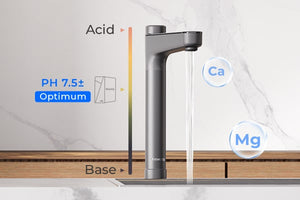
alkaline
remineralization or UV sterilization. It makes this system adaptable as
family needs change over time.
4. APEC ROTL-1000 Reverse Osmosis System

Best for:
Large families who prioritize the highest level of purification, speed, and
sanitization
Price: $599.95
Why choose it
- Delivers an incredible 1000 gallons per day (GPD) flow rate
- NSF 372 and 58 standards for exceptional impurity reduction
- High-efficiency 2: 1 pure to drain ratio
Our use experience
The ROTL-1000 can function in both high-volume and high-speed modes. The
1000 GPD output provides water access almost instantaneously, and it
entirely eliminates sluggish trickle, which was characteristic of previous
RO systems.
When one thinks of systems in large family situations or in situations of
regular cooking, this flow rate becomes relevant.
It features front-facing, fast-twist filter design to facilitate streamlined
maintenance, and replacing filters becomes easy and convenient.
5. SimPure T1-400UV Reverse Osmosis System

Best for:
Water-saving advocates and users in small-to-medium living spaces (like
apartments)
Price: $350
Why choose it
- Employs an upgraded 8-stage filtration technology
- 1.5: 1 pure-to-drain ratio
- Equipped with filter replacement alerts, including pre-membrane pressure detection
Our use experience
While 400 GPD is typical compared to competition, it provides sanitary water
in an instant and on demand, without needing to use a storage tank and
without chance of secondary contamination.
We tested the precision features like replacement alert based on
pre-membrane pressure detection. The outcome verified it indeed issued
appropriate and on time reminders for maintenance.
It's best suited for apartment dwellers or people who have small cabinets.
How to Choose the Suitable Tankless RO Water Filter?
1. Start with Your Water Pressure
Before you select any water filtration system, check your water pressure
first. You'll require 40-80 PSI in order for these systems to do their
wonders.
It's an inexpensive pressure gauge, costing around $10, but it'll save you
grief in the long run. Don't worry –
a booster pump
can help, though it adds around $150-200. Morning and evening pressure can
vary, so test at different times to get the full picture.
2. Think About Your Family's Daily Routine
Think of an average morning – coffee brewing, water bottle refilling,
breakfast prep. The couple generally needs 160-200 GPD, and an active family
of four likes 320-400 GPD.
More capacity means less waiting time when everybody wants water at once.
You don't have to go crazy, though. Identify that happy medium of having
enough and not wasting money on capacity you're not going to utilize.
3. Look Beyond the Price Tag
The purchase upfront only discloses part of the cost. You'll pay between
$100-150 per year for replacement filters, so budget for it. Some systems
have proprietary filters which aren't readily available and are more
expensive.
Also, check the ratio of waste – new 2:1 systems have lower water loss than
old designs. Professional installation runs $150-300 but often includes
warranty coverage and peace of mind.
4. Make Sure It's Truly Safe
Those certification labels really do matter.
NSF/ANSI 58
means the system actually removes what it claims. NSF 372 ensures no lead in
the materials. These certifications come from independent testing, not
marketing departments.

FAQs About Best Tankless Reverse Osmosis Systems
How do tankless reverse osmosis systems work without storage tanks for water?
Tankless RO systems deploy high-pressure pumps and increased membrane face
area to deliver filtered water on-demand. They eliminate storage tanks by
filtering within seconds after being dispensed. It saves space, prevents
bacterial growth risk, and provides fresh RO water right away with
absolutely nil waiting time for tank refills.
Do tankless RO systems waste less water than standard tank-based systems?
Most tankless RO systems offer better efficiency ratios from 2:1 to 4:1
(pure to waste water) compared to standard 1:4 ratios. However, they may
cycle more frequently for on-demand production. Overall water efficiency is
controlled by usage patterns and individual system design more than by
tankless technology itself.
What water pressure is required for tankless reverse osmosis systems to work efficiently?
Tankless RO systems typically require 40-80 PSI inlet pressure for optimum
effectiveness. Lower pressure may require booster pumps. Greater pressure
increases production rate and effectiveness. Verify house water pressure and
install pressure-boosting pumps if needed for efficient tankless RO system
operation.
Do tankless RO systems produce water fast enough to serve large families?
Production capacities vary from 0.5-2 gallons/minute depending upon system
size and inlet pressure. It suffices most home drinking applications but may
be limiting with some simultaneous high-volume applications. Large families
would be better served with higher-capacity tankless systems or hybrid
tank/tankless configurations to ensure abundant supply.
What maintenance is needed for tankless reverse osmosis systems to work at peak efficiency?
Replace pre-filters every 6-12 months, RO membranes every 2-3 years,
post-filters every 12 months. Flush systems monthly if unused for longer
periods. Clean sensors and pumps according to recommendation. Tankless
systems may require more frequent service for pumps but eliminate tank
requirement for sanitizing.
Conclusion
It all boils down to three: your home, your water needs, and budget. Be sure
to look for certifications, crunch numbers on actual-year costs, not
advertised purchase cost, and don't forget to include professional
installation in your budget.
After years of testing, we consistently find
Waterdrop
among the most reliable brands, their engineers actually listen to what
families need. Clean water shouldn't be complicated. Pick a system that fits
your life and stick with it.

Choose Your Water Solutions
- Smart Reverse Osmosis System No Tank, No Bacteria
- Water Filter for Sink Space & Water Saving
- Refrigerator Water Filter Pure Water, Effortlessly
- Water Filter Pitcher Stay Hydrated Always
- RO System Replacement Filters Change Your Filters Regularly
Categories
- Buyer's Guide Complete buying guides to help you choose wisely
- Water Contaminants Offer the best solution to solve the water problems
- Water Stewardship Responsibility for sustainable water management
- Home and Wellness A better and healthier world for individuals and families
- Customer Voice Take a look at how other users evaluate Waterdrop


